Scammers are becoming more sophisticated and using a wide range of platforms, so more and more people are being caught out, especially via online shopping, personal banking, and investment fraud scams. There’s also been a significant increase in ‘smishing’ (SMS fraud), with scammers asking customers to click a link to reschedule deliveries or pay incomplete shipping charges. Fraud is now the most common crime in the UK.
Common types of scam
Scams can take many forms, find out more about romance fraud, doorstep scams, mail scams, online scams, pension and investment fraud, and phone scams.
Fraudsters are constantly coming up with new ways of getting access to money and information. New technology offers opportunities for scammers to innovate, so there is a growing range of scams and the terms to describe them.
Tactics scammers use to hook you
We’ve looked at the psychology around scams to help people protect themselves. Victims of scams often report that, in hindsight, they felt something wasn’t quite right. Recognise some of the scammers' tactics and tell them to 'sling their hook' if something doesn’t feel right.
Here are five tactics that scammers use to hook people in. Knowing them will help you stay one step ahead and protect yourself and your loved ones.
RECIPROCITY Image
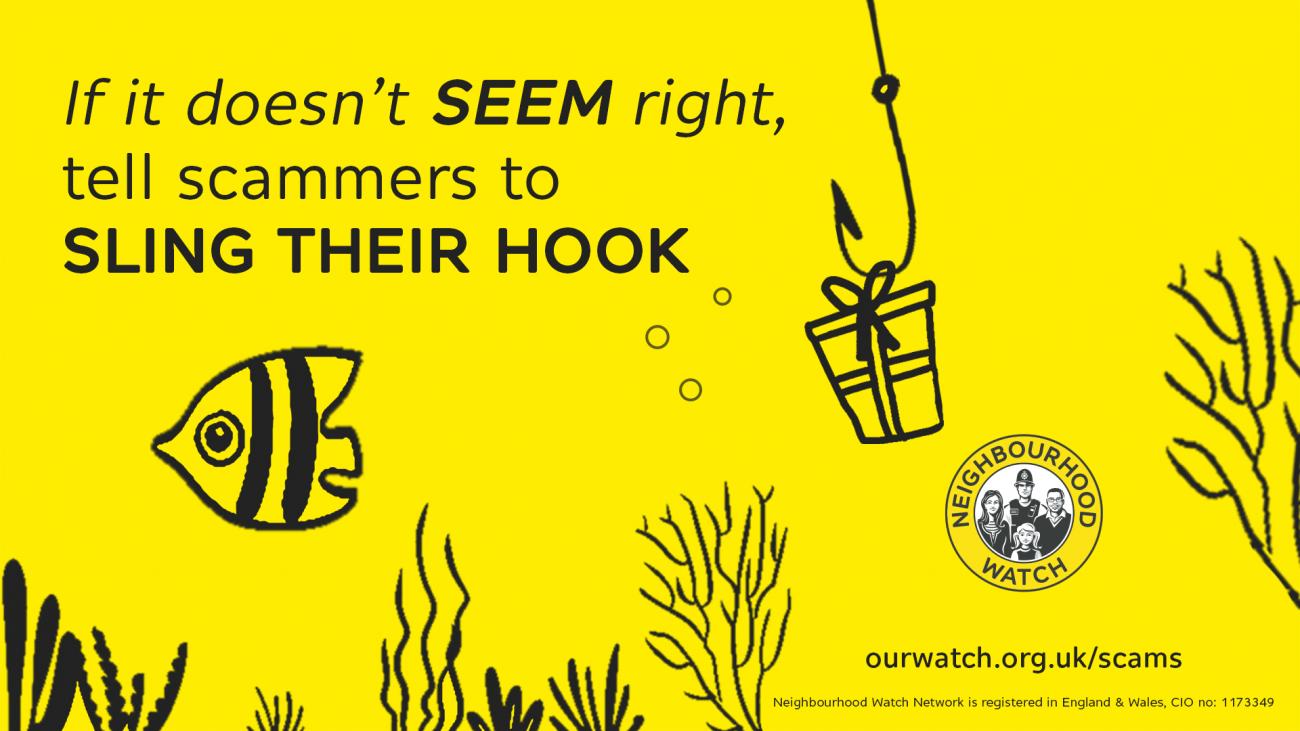
They imply they’re doing you a favour | SOCIAL PROOF Image
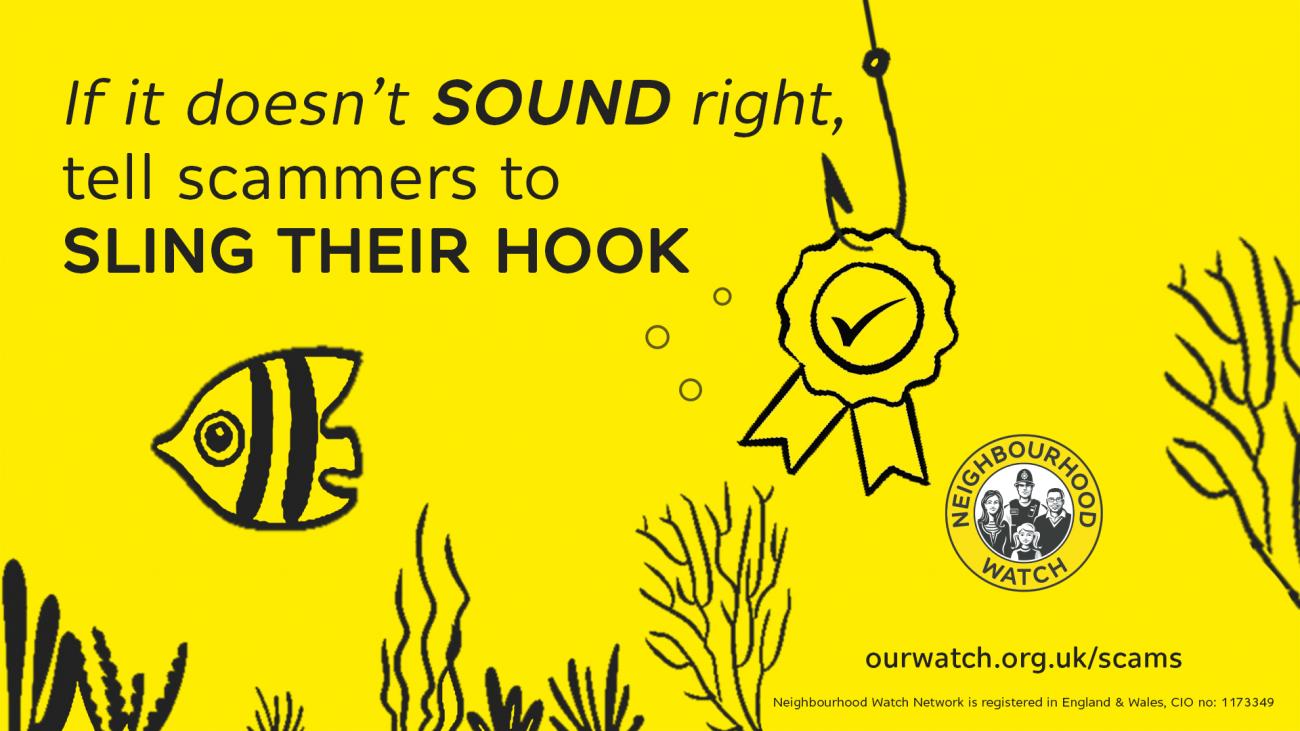
They indicate everyone else is doing this |
URGENCY Image
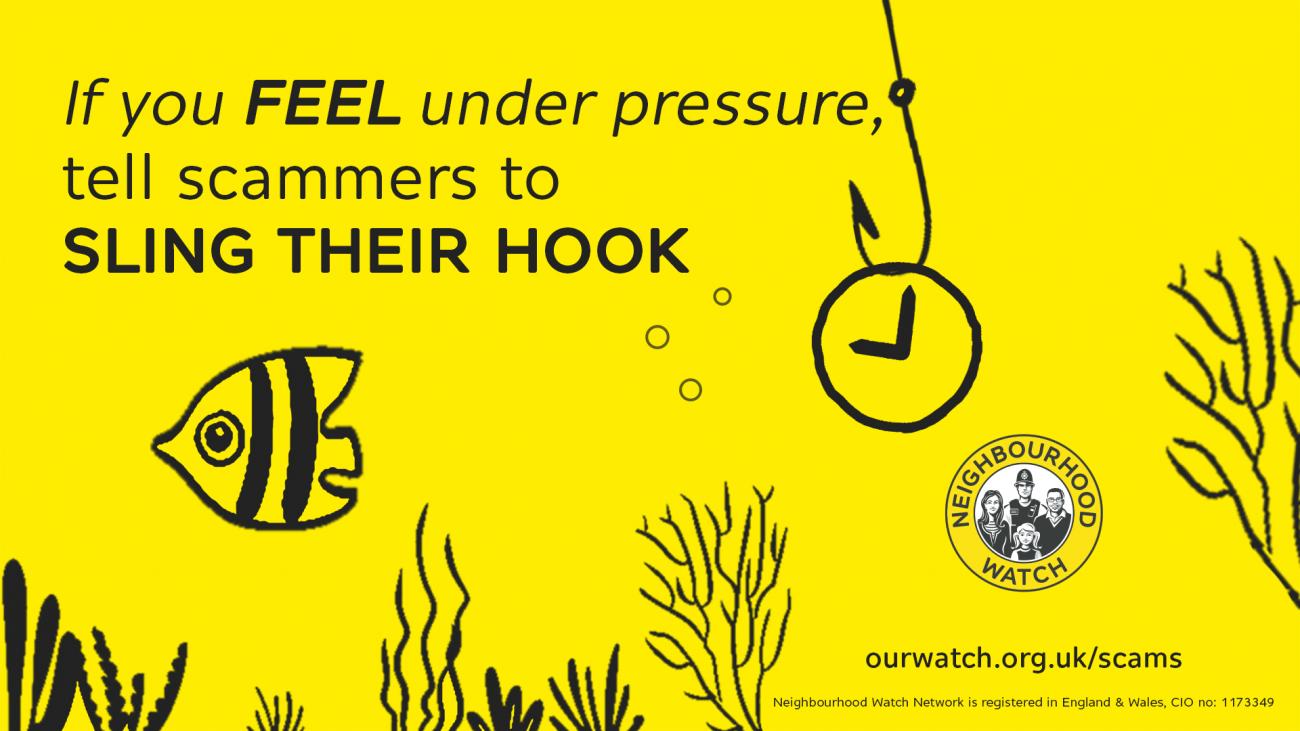
They say your only chance is to act now | CONNECTION Image
They act like they’re similar to you so you like them and want to please them |
COMMITMENT Image
They ask you to do one little thing which makes you do more |
Reporting scams
Anyone can become a scam victim. If you, or someone you know, has been a victim, find out how to report it here.
Take Five to Stop Fraud
Take Five to Stop Fraud is a national campaign that empowers individuals and businesses across the UK to protect themselves against financial fraud. Criminals are experts at impersonating people, organisations and the police. They spend hours researching you for their scams, hoping you’ll let your guard down for just a moment. Stop and think. It could protect you and your money.
- Stop: Taking a moment to stop and think before parting with your money or information could keep you safe.
- Challenge: Could it be fake? It’s ok to reject, refuse or ignore any requests. Only criminals will try to rush or panic you.
- Protect: Contact your bank immediately if you think you’ve fallen for a scam and report it to Report Fraud.
Cyberhood Watch
We created Cyberhood Watch to help people learn more about cybersecurity risks. Find out more about how to protect yourself online.